
The Art of Preparation: Why Fine Arts Require More Than Just Showing Up
In our everyday world, it’s easy to attend an event and enjoy whatever happens – family parties, casual meetups, movie nights. Fine art is different. It asks more: it asks us to meet it halfway, to bring patience, curiosity, and a readiness to see more than what’s on the surface.
Georgia O’Keeffe captured this truth perfectly when she wrote: “Nobody sees a flower — really — it is so small — we haven’t time — and to see takes time, like to have a friend takes time.” Her words remind us that art rewards time and attention.
The Modern Challenge
We’ve grown up expecting instant gratification—movies, streaming, social media, quick takes. But fine art works differently. It often defies easy consumption. It asks for preparation: knowing a bit about the artist, the context, even the reception at the time can transform how we experience something.
When I visit museum with my sister (who has a PhD in Art History), I’ve learned this firsthand. She doesn’t rush. We pause at the paintings that are important to us. She explains technique, controversies, and reception. We linger. Sometimes the most powerful moments come from what I didn’t notice at first glance.
The Limits of Fame
Fame draws crowds—but it doesn’t always create understanding. When Beyoncé and Jay-Z released their music video set in the Louvre, the Mona Lisa had a surge in visitors.
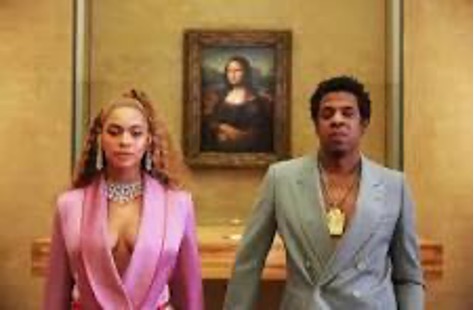
But being in front of her—or seeing her in a famous video—isn’t the same as seeing her. Background turns a famous image into something more.
Take the Mona Lisa, for example. Some theories suggest the painting might be a disguised self-portrait of Leonardo da Vinci, or even Leonardo in drag. Others claim it’s a portrait of Lisa Gherardini, a merchant’s wife. Viewing the Mona Lisa through the lens of these possibilities adds layers of meaning and complexity, especially to her smile.

Today, we see it as a serious masterpiece, but that smile might have been Leonardo’s private joke—a subtle, centuries-old wink at the viewer. This is why we don’t always know exactly what we like—because of context
Beyond “I Know What I Like”
It is easy to dismiss new works with “I know what I like” or “I’ll know what I like when I see it.” But can we really know what we like if we gloss over what lies beneath?
Take atonal music – like Schoenberg or Philip Glass. It’s easy to label them as “strange” or “unpleasant.” This piece by Schoenberg is atonal, Suite for Piano, Op. 25.
But these composers didn’t use dissonance to shock – they responded to a world in turmoil. World War I changed the world forever; normal harmony, melody and order no longer felt adequate.
Stravinsky’s “Rite of Spring” famously caused a riot at its 1913 Paris premiere due to its dissonant harmonies.
Today, it is recognized as groundbreaking, but when it premiered audiences needed time to understand it.
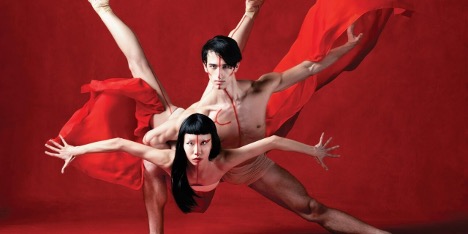
We scroll through social media and spend a few seconds on a post or watch YouTube videos on 1.75 speed. So, when we hear a new song or walk into a museum, we’ve learned to judge it almost immediately. Sitting with a painting (or any art) for more than a few minutes? That can actually feel weird.
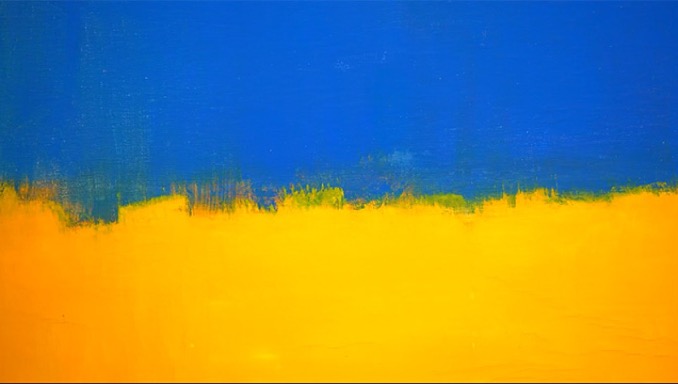
People often react to art by saying things like, “Why is that art? I could compose that—it’s just a few repeated notes,” or “That painting is just two colors—I could do that,” especially when looking at Rothko’s color‑field works like Untitled (Yellow and Blue). We are forced to look at it and see what it makes us think of, and what emotions it brings up in us.
When Philip Glass repeats musical phrases for half an hour, he isn’t just being repetitive—he’s using minimal musical material to shift our sense of time, to let small changes take on greater significance.
So, the question isn’t “Could you physically recreate this piece?” It’s more, “Why did the artist choose these materials, this sound, or these movements?
The Value of Familiarity
This summer I went to a concert full of John Williams music it was a a full symphony orchestra up in the mountains—and it was magical. What struck me most was how the entire crowd knew every single song. The audience swayed to Star Wars, hummed along with E.T., and cheered at the first notes of Indiana Jones. It felt like a giant sing-along, familiar in the very best way.
It reminded me of running a 10K. By race day, you’ve already logged those 6.2 miles dozens of times. The race isn’t about proving you can cover the distance—it’s about the shared experience of doing it together.
This got me thinking about how familiarity shapes our relationship with art. Sometimes what turns people off to new music isn’t that it’s bad—it’s simply that they haven’t had time to get familiar with it. Even Beethoven’s masterpieces didn’t always win over listeners instantly.
His Ninth Symphony was initially criticized as too long, too emotional, and too loud. But as people heard it more frequently, it grew on them. The same happened with his Fifth Symphony. Those opening notes—da-da-da-dum—are now so embedded in our culture that it’s easy to forget how revolutionary they once sounded. Beethoven called them “the sound of fate knocking at the door.”
The Fifth Symphony’s premiere was actually a disaster. It was premiered in December 1808 in Vienna. It was a freezing theater with under-rehearsed musicians, and a grueling four-hour program of all-new works. During one section of it, things went so wrong Beethoven had to stop the musicians and restart mid-performance. No wonder people walked out underwhelmed. That night, the Fifth was heard by tired ears in a chilly hall, buried deep in a huge program.
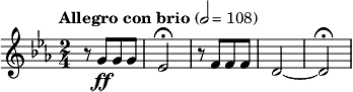
But fast forward to World War II, and those same opening four notes — da‑da‑da‑DAH — took on a whole new meaning. They matched the Morse code for the letter “V” (dot‑dot‑dot‑dash). Churchill and the BBC used that motif as a symbol of victory, resistance, hope. What was once strange and new became a powerful call to action.
The story of the Fifth shows that something that might seem long or strange at first can, over time, become beloved — not just because it’s familiar, but because its meaning deepens.
Hidden Depths and Darker Truths
Degas’s ballet scenes are beautiful, but they are also embedded with exploitation. In 19th-century Paris, ballet in the opera had become less about art and more about spectacle, with dancers exposed not just physically but socially.
Degas called his ballerina models les petits rats—”the little rats”—and most came from extreme poverty. To survive, many were pushed into exploitative relationships with wealthy opera subscribers. The foyer de la danse, a backstage rehearsal room, doubled as a social space where patrons could mingle with the dancers, creating all the pressures and abuses that arrangement implied.
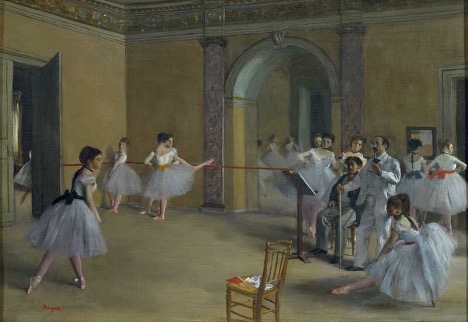
This context transforms how we see Degas’s work. When we look at his backstage scenes, his rehearsal studies, his off-stage moments, there’s a tension the paintings both reveal and conceal. The formal beauty remains light catching fabric, grace captured in posture, the physical discipline of the dancers. But there’s also a haunting awareness that many of these women were vulnerable and dependent, trapped within social hierarchies that offered them few alternatives.
Degas documented not just the artistry of ballet, but the harsh realities of the women who performed it.

The Live Experience
This brings us to an interesting question: Why did millions of people pay hundreds or even thousands of dollars to attend Taylor Swift’s Eras Tour when they had already heard all the music? They could have listened in their cars and saved $1000. I think the answer is the communal experience of shared preparation and appreciation—the collective joy of experiencing familiar art together in a live setting.
Conclusion
Fine art doesn’t just reward attention—it insists on it.
As O’Keeffe reminds us: “Nobody sees a flower — really — it is so small — we haven’t time — and to see takes time, like to have a friend takes time.”
Whether in front of a painting, listening to a new composition, or watching ballet, when art doesn’t speak immediately that’s fine—it’s often the first meeting. Give it another look, another listen, another moment. The real meaning often comes in the second, third, or fourth acquaintance.
 Tracks & Tangents
Leave a comment