
When Beethoven Goes to Work: Classical Music Gets a Detective Job
I recently discovered a delightful show called Ludwig on BritBox that combines two of my favorite things: clever mysteries and classical music. The premise is brilliantly simple: when a detective mysteriously disappears, his reclusive twin brother—a puzzle creator who writes under the pseudonym “Ludwig”—must step into his shoes and impersonate him at work. While pretending to be a detective, he searches for clues about his brother’s disappearance, creating the perfect setup for a cozy, brainy whodunit.

What elevates this show from good to brilliant is its soundtrack. The entire series reimagines Beethoven’s compositions, giving his classical pieces a sleek, modern twist that perfectly echoes the puzzle-solving theme.
🎵 Track from Ludwig – First Track
Listen here
Here’s a similar version of the track:
Listen here
This track transforms Beethoven’s Piano Sonata No. 17 in D minor, often called “The Tempest”—though Beethoven himself never used that nickname. The original sonata is one of his most psychologically intense works, written during his struggle with hearing loss around the time he penned the famous Heiligenstadt Testament, expressing his anguish over his deafness.
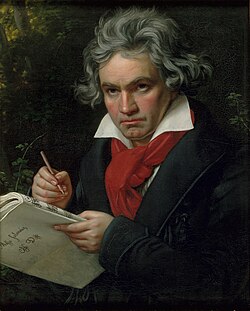
The music mirrors this internal struggle beautifully. Rolling arpeggios alternate between hands like relentless waves, evoking Beethoven’s turbulent emotional state. The rhythm feels deliberately off-kilter—the downbeat gives way to a strong upbeat at the piece’s opening, creating an imbalance that reflects the composer’s inner turmoil.
This psychological complexity makes it a perfect fit for Ludwig. Just as Beethoven grappled with his identity as a composer losing his hearing, the protagonist John is thrust into his brother’s mysterious life with little understanding of what happened. The tension in the music mirrors the show’s intrigue and John’s own inner conflict.
For context, here’s the original Beethoven Piano Sonata No. 17:
Listen Here
I played Beethoven’s Tempest sonata in college and loved it, though I don’t think I fully grasped how psychologically complex and innovative it was at the time. Looking back, I can appreciate why it works so perfectly for Ludwig‘s mysterious atmosphere.
Funny side note: my sister happened to be job hunting while I was practicing this piece. I’m sure my endless repetition of those dramatic opening passages didn’t help her stress levels. During one virtual interview, the interviewer asked about the piano music in the background. My sister, thinking quickly, said she was “working from a piano studio.” 🤭🤦♀️
Those first four notes are so distinctive—you can identify the entire sonata from that opening alone. It’s the kind of musical signature that sticks with you, which makes it perfect for a show about puzzles and mystery.
The show’s musical scope extends well beyond this single sonata. I’ve caught quotes from Beethoven’s Symphonies No. 7 and 9, plus other piano sonatas including the Waldstein. It’s a beautiful score that’s worth watching for the music alone—though the series itself is genuinely fun too.
The Classical-Modern Bridge
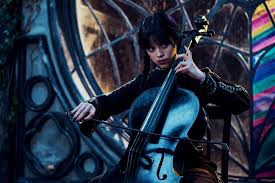
This creative reimagining reminds me of how classical music permeates popular culture in fascinating ways. Take Netflix’s Wednesday, which gained attention for the protagonist’s virtuosic cello playing—particularly her rendition of “Paint It Black” (technically impossible to play on cello, but visually striking nonetheless).
Then there’s the reverse approach: classical musicians tackling pop music. The Vitamin String Quartet, famous for their Bridgerton soundtrack, “classifies” contemporary hits with elegant string quartet arrangements.
My favorite example: Their cover of Billie Eilish’s “Bad Guy”
Listen Here
This video captures pure joy—the quartet swings their bows before playing, moves to the beat, and generally has a blast. Each instrument gets a turn with the melody (especially fun when the viola takes over), and the cinematography matches the energy with sliding camera work that mirrors the musical phrases. The cellist even spins his instrument at one point!

Another standout is Max Richter’s Recomposed: Vivaldi – The Four Seasons, which reimagines the baroque masterpiece for contemporary ears:
Richter’s Recomposed Version:
Listen Here
Original Vivaldi for comparison: Listen Here
Bridging Two Worlds
What I love about these classical crossovers is how they bridge classical and modern sensibilities—whether by reshaping timeless works for today’s listeners or translating pop music into classical language. They prove that great music transcends genre boundaries and that classical techniques can breathe new life into contemporary sounds (and vice versa).
Ludwig exemplifies this beautifully, using Beethoven’s emotional complexity to underscore a modern mystery. The result is something both familiar and fresh—much like the protagonist himself, operating in his brother’s world while maintaining his own unique perspective.
What are your favorite examples of classical music reimagined in modern ways—or pop songs adapted into classical form?
Share them in the comments!
 Tracks & Tangents